Christmas in the Lebanese tradition is a celebration I have a deep respect for, even though I do not personally observe it. Arab Christians make up a significant and beautiful part of our community — and the Lebanese Christmas table is something I know well, having grown up surrounded by it and the families who make it their most important day of the year.
In Lebanon, Christmas begins long before the 25th of December. The Eve of the Feast of St Barbara, on the 3rd of December, marks the start of the festive season. Families begin preparing, growing wheat by placing seeds on damp cotton wool — a symbol of new life and good things to come. By Christmas Eve, the sprouted wheat sits beside the nativity display.
On Christmas Day, the table is everything. It is set with care, decorated with intention, and filled generously. The lunch lasts for hours. People come and go. The food keeps arriving.
This is my suggested menu — Middle Eastern recipes that are proven crowd-pleasers, organised so you can spread the work across the week and actually enjoy the day itself.

🎄 The Christmas menu
This menu is designed to balance oven dishes and stovetop dishes, make-ahead options and fresh-day cooking. Everything here is generous, celebratory and deeply rooted in Middle Eastern flavour.
To start — the mezze
Hummus
Made from scratch, smooth and generously dressed with olive oil. Make it two days before and refrigerate. Bring to room temperature before serving. This is the dish that goes on the table first and stays until the end.

Laham B’Ajeen
The Lebanese meat flatbread — spiced mince on a crisp puff pastry base. This is my quick version of the traditional and it is the one I always come back to for entertaining. Make a batch one week ahead and freeze raw. On Christmas Day they go straight from frozen into the oven — forty-five minutes before guests arrive and they are ready. The house smells incredible before anyone has even sat down.

The mains
Lebanese Chicken Rice
The centrepiece. A whole chicken slow-simmered into a dark, fragrant stock, then used to cook spiced rice that absorbs every bit of that flavour. Topped with chunky shredded chicken and a crown of toasted pine nuts and almonds. This platter lands in the centre of the table looking opulent and generous and feeds a crowd beautifully. Make the stock the day before — the whole dish comes together faster on the day.

→ Lebanese Chicken and Rice — Ruz Ajaj
Slow Cooked Lamb Shoulder Roast
For the table that wants to go bigger — a lamb shoulder rubbed with herbs and garlic, slow-roasted until the meat pulls away from the bone without any effort. This is the optional second main for larger gatherings. It goes in the oven in the morning and needs almost nothing from you after that. Serve it alongside the rice and let the table decide which to go back for first.

→ Slow-Cooked Lamb Shoulder Roast
The salads
Tabouleh
All that finely chopped fresh parsley, a little bulgur, tomato, spring onion, lemon and olive oil. Made fresh on the day — do not dress it until just before serving. The brightness of the tabouli cuts through the richness of the lamb and rice and makes everything on the table feel balanced.

Or Fattoush
Crisp lettuce, cucumber, tomato, radish, spring onion and toasted bread, tossed in a tangy pomegranate molasses and sumac dressing. The bread is what makes fattoush — it must go in just before serving so it stays crunchy. Chop all the vegetables the morning of Christmas Day and keep them in the fridge. Add the toasted bread and dressing at the very last minute.
Fattoush prep tips:
- Toast or fry the bread 2–3 days ahead and store in an airtight container at room temperature — it keeps perfectly.
- Make the dressing the day before and store in a jar in the fridge.
- Chop the vegetables on Christmas morning and refrigerate.
- Combine everything and dress just before serving.

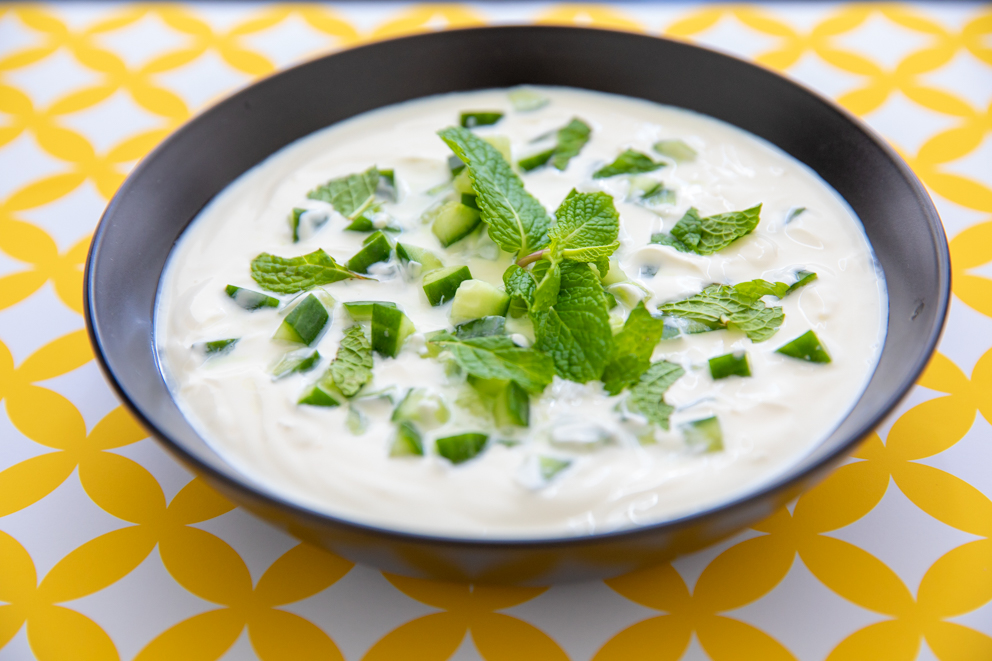
Yogurt and Cucumber Salad
Cool, tangy yogurt with cucumber, dried mint and garlic. Serve very cold alongside the rice. This is the salad that sits quietly next to everything else and makes every bite better. Make it up to two days before and store covered in the fridge. Or simply serve a bowl of cold natural yogurt alongside — it works just as well.
The fruit table
A Lebanese Christmas table always has fruit. This is not a plated dessert fruit — it is a full arrangement, abundant and beautiful, placed on the table alongside everything else or as part of the dessert spread. Cherries, grapes, lychees, stone fruit, whatever is at its best in December. Arrange generously on a platter or tiered stand. It needs no recipe — just good fruit, bought the day before and chilled.

The dessert
→ Moghli — Caraway Spice Pudding
Moghli

This is the traditional Lebanese Christmas dessert — a fragrant caraway and rice pudding that celebrates the birth of Jesus, just as it celebrates the birth of a new baby in Lebanese families. Spiced with caraway and cinnamon, served cold in individual glasses and topped generously with coconut, pine nuts, almonds, walnuts and pistachio. It is an acquired taste that becomes deeply loved. Make it 2–3 days before and refrigerate uncovered. The soaked pine nuts and slivered almonds are added just before serving on Christmas Day.
Coconut and Nut Stuffed Dates

→ Coconut and Nut Stuffed Dates
No cooking, no oven, no effort — just Medjool dates split open, filled with a combination of almonds, pistachios and shredded coconut, and arranged on a platter. Dates are the original Arab sweet and on a Christmas table they bring something beautiful and natural alongside the richer desserts. Make them three days ahead, arrange them on their serving platter and cover with plastic wrap. They are ready to go — just remove the wrap and place on the table when your guests arrive. No fridge needed.
Pistachio and Coconut Chocolate Log

→ Pistachio and Coconut Chocolate Log
A no-bake chocolate log studded with pistachios and coconut — rich, indulgent and completely make-ahead. Make it one to two weeks before Christmas and keep it in the freezer. Remove for five minutes, slice into your desired shape and size, then return to the freezer. On Christmas Day it goes straight from the freezer to the plate — no last-minute work, no stress. If you love no-bake desserts, this one is for you.
📋 The step-by-step plan — so Christmas Day is actually enjoyable
The secret to a Lebanese Christmas lunch that looks abundant without exhausting the cook is spreading the work across the week. Here is exactly how to do it.
One week before Christmas
- Plan the menu in detail and write your shopping list.
- Print out all recipes so they are ready for the big day.
- Sort your serving dishes — one for each dish, label them and set them aside. Try not to use them for anything else this week.
- Buy all non-perishable items and ingredients with longer shelf life — rice, nuts, spices, olive oil, canned chickpeas, napkins, etc.
6 days before Christmas
- Make the Quick Laham B’Ajeen and freeze. They go straight from frozen into the oven on Christmas Day — no defrosting needed.
5 days before Christmas
- Make the Pistachio and Coconut Chocolate Log. Place in the freezer. On Christmas Day you simply plate it straight from the freezer — no last-minute preparation needed.
- Remove from the freezer for 5 minutes, cut into your desired shape and size, then return to the freezer. It will be ready to plate on the day.
4 days before Christmas
- If you are making tabouli, finely chop your parsley now and store it between two paper towels in an airtight container in the fridge. It will stay fresh and ready for when you need it.
3 days before Christmas
- Make the Moghli — caraway pudding sets beautifully over 2–3 days and only needs its nut garnish added just before serving. Keep it refrigerated and uncovered to prevent it from getting wet.
- Soak the pine nuts and slivered almonds for the Moghli garnish in water and place in fridge. Change the water daily to keep them fresh. They will puff up and stay beautifully crisp when placed on top.
- Stuff and arrange the dates in their serving dish, cover with plastic wrap and set aside on the bench. They do not need to go in the fridge.
- Buy all fresh vegetables and remaining ingredients.
- Wash the vegetables, dry them well and store in the refrigerator.
2 days before Christmas
- Make the hummus. Store covered in the fridge.
- If making the breadsticks, today is the day. Fry them and place in a vase or tall jar — they keep beautifully at room temperature. No need to cover them.
- Toast the pine nuts and almonds for the rice. Store in an airtight container.
- If you are making the yogurt and cucumber salad, prepare it today and store covered in the fridge. It keeps beautifully for two days. Alternatively, a simple bowl of cold natural yogurt on the table works just as well alongside the rice and lamb — no recipe needed.
- Chop the onion for the rice and store in the fridge.
- Remember — change the water on the soaking pine nuts and slivered almonds.
1 day before Christmas
- Prepare the Slow-Cooked Lamb Shoulder Roast — rub with herbs and garlic, place in the roasting dish along with the vegetables and cover. Tomorrow all you need to do is add the water and put it in the oven. It looks after itself from there.
- Cook the whole chicken in the spiced stock. Once cooked, remove and shred the meat. Strain and reserve the stock. Store the shredded chicken and stock separately in the fridge overnight — this is what makes the rice so deeply flavoured on the day.
- Cut the carrot sticks and place them in water in the fridge to keep them fresh and crisp.
- Cut the celery sticks and place in an airtight container in the fridge.
- Set and decorate the table tonight — one less thing to think about tomorrow. Get the kids involved with this.
- Remember — change the water on the soaking pine nuts and slivered almonds.
Christmas Day
7:45 AM — Let’s get these out of the way first. Place the Laham B’Ajeen straight from frozen into the oven — no defrosting needed. Follow the recipe for oven temperature and timing. While these are baking, use the time to cut up the fruit.
8:30 AM — Laham B’Ajeen should be done. Remove from oven. Lower the heat according to recipe instructions and put the Lamb Shoulder Roast in. Remember to also add the water. Allow 3–4 hours depending on size. Cover tightly with foil and leave it to do its thing. It needs no attention from you after this.
9:00 AM — Cut the remaining veggie sticks. Cucumber and capsicum must be cut fresh on the day.
9:30 AM — Chop the tabouli or fattoush salad ingredients and store in the fridge. Do not dress yet.
10:30 AM — Start the Lebanese Chicken and Rice. Using the reserved stock from yesterday, cook the rice — it takes around 30 minutes. While the rice is cooking, warm the shredded chicken through. Top the finished platter with chicken, toasted pine nuts and almonds.
11:00 AM — Set out the hummus, dates, veggie sticks and breadsticks on the table.
☕ HAVE A COFFEE. YOU DESERVE IT.
12:15 PM — Check the lamb — it should be falling off the bone. Remove the foil for the last 15 minutes if you want the top to colour.
12:20 PM — Dress the tabouli or fattoush fresh. Begin plating and garnishing everything. Bring the fruit platter to the table.
1:00 PM — Your guests arrive. The table is set. The food is ready. You are not in the kitchen. You did it.
A few veggie stick tips worth knowing:
- Carrot sticks — place in water in the fridge to prevent browning.
- Celery sticks — store in an airtight container or bag in the fridge.
- Cucumber and capsicum — cut on the morning of Christmas Day only.
You do not need all four varieties — choose what you like best. Red and yellow capsicum add a beautiful pop of colour to the table if you do include them.
A note on this menu and timeline
This menu and the timing above is a guide — not a rule. Everyone cooks differently. Some people are completely comfortable doing multiple things on the day under pressure. Others prefer to have everything done well in advance and simply assemble on Christmas Day. Both are right.
You do not need to make everything listed here. Choose what suits your table, your time and your confidence in the kitchen. Do the rice and skip the roast. Do the roast and keep everything else simple. Swap any dish for something you prefer or feel more comfortable making — my website has a full collection of recipes to choose from and anything that works for a crowd will work here.
The most important thing is that you enjoy the day. A Christmas table made with love — whatever is on it — is always the right one.
Building a cheese board?
If you want to add a cheese board to the spread, this step-by-step guide covers everything — colours, textures, what to include and how to make it look like you spent hours when it really takes fifteen minutes.

A note on the Lebanese Christmas table
The Lebanese Christmas lunch is not a rushed meal. It starts and it does not hurry to finish. People eat slowly, talk long, come back for more. The table is abundant not because anyone is trying to impress but because generosity is simply how Lebanese people express love.
Whether you are celebrating Christmas yourself, cooking for Lebanese Christian family or friends, or simply want to bring Middle Eastern flavour to a December gathering — this menu works. The food is generous, the planning is manageable, and the table will look and taste like you spent far more time on it than you did.
Kell am wa antom bi kheir — may you all be well this season. 🎄
Cooking this for Christmas? Tag me on Instagram @roubasfoodjourney — I love seeing your Christmas tables.